rice husk charcoal machine

Rice husk is an abundant agricultural residue with significant potential for biochar production. As rice processing industries generate large quantities of husks, converting this biomass into charcoal offers opportunities in agriculture, soil improvement, industrial materials, and carbon removal.
However, producing charcoal is only the first step. Commercial buyers increasingly require reliable quality data, contaminant testing, and compliance with recognized biochar standards. For producers targeting European markets, understanding the European Biochar Certificate (EBC) and its quality requirements is particularly important.
Rice husk biochar also has some unique characteristics, especially its relatively high silica and ash content. These properties make feedstock preparation, carbonization control, and laboratory testing essential parts of a successful production process.
1. Why Rice Husk Biochar Requires Special Quality Control
Unlike many wood-based feedstocks, rice husk naturally contains a considerable amount of silica. During carbonization, organic components decompose, while much of the inorganic mineral content remains in the solid product.
As a result, rice husk charcoal often has a higher ash content than wood-based biochar. This does not automatically mean that the product is low quality. Silica can be valuable in certain agricultural and industrial applications. However, high ash content affects the proportion of organic carbon in the finished product and must be considered when evaluating its suitability for different markets.
Other characteristics worth monitoring include:
- Fixed carbon: Indicates the carbon-rich fraction remaining after volatile matter is removed.
- Ash content: Reflects the inorganic mineral residue, including silica.
- pH: Determines whether the biochar is acidic, neutral, or alkaline.
- Electrical conductivity (EC): Helps assess soluble salt content.
- Moisture: Influences storage, transportation, and product consistency.
Understanding these characteristics helps producers identify suitable applications and establish realistic product specifications.
2. Understand the Applicable Biochar Standards
Different markets and applications have different biochar quality requirements. The European Biochar Certificate (EBC) is an important certification framework for producers targeting European customers. It evaluates not only the final biochar but also feedstock suitability, production conditions, environmental performance, and quality management.
EBC includes different certification classes for applications such as agriculture, materials, and animal feed. The applicable requirements depend on the intended use.
Producers should pay particular attention to:
- Permitted biomass feedstocks
- Carbon content and elemental composition
- Hydrogen-to-organic-carbon ratio (H/Corg)
- Heavy metal concentrations
- Polycyclic aromatic hydrocarbons (PAHs)
- Physical and chemical product properties
- Production and environmental management records
It is important to use the current applicable EBC guidelines rather than relying on outdated threshold tables. The EBC framework is regularly updated, and requirements can differ between certification classes.
3. Key Laboratory Tests for Rice Husk Biochar
Laboratory analysis is essential for determining whether rice husk biochar meets the specifications of its target market.
Elemental Analysis
Carbon, hydrogen, nitrogen, oxygen, and sulfur are important indicators of biochar composition. Organic carbon content is particularly relevant for soil applications and carbon removal projects.
The H/Corg ratio is also used to assess the degree of carbonization and the stability of the carbon structure. A lower ratio generally indicates a more highly carbonized material.
Heavy Metal Testing
Although clean rice husks are plant-based materials, their mineral composition can vary depending on soil conditions, cultivation practices, and processing history. Relevant tests may include arsenic, cadmium, lead, mercury, chromium, nickel, copper, and zinc.
PAH Testing
Polycyclic aromatic hydrocarbons can form during incomplete or poorly controlled thermal decomposition. Excessive PAH concentrations may restrict the suitability of biochar for certain applications.
Physical and Chemical Properties
Additional tests may cover pH, electrical conductivity, moisture, bulk density, specific surface area, and nutrient composition.
For rice husk biochar, ash and silica content deserve particular attention because they can strongly influence the product's performance and commercial value.
The EBC analytical methods provide guidance on sampling, sample preparation, and laboratory testing procedures.
4. Control Carbonization Temperature and Residence Time
The quality of rice husk biochar is strongly influenced by carbonization conditions. During pyrolysis, rice husks are heated in an oxygen-limited environment. Organic components decompose and release gases and vapors, while the remaining solid becomes increasingly carbon-rich.
Temperature affects several important properties:
- Higher temperatures generally reduce volatile matter.
- Fixed carbon content may increase as carbonization progresses.
- Solid biochar yield usually decreases as more organic material decomposes.
- Surface structure and pore development can change with temperature.
For many biomass carbonization processes, temperatures around 400–700°C are used, depending on the feedstock and target product. This is a general technical range, not a universal EBC requirement.
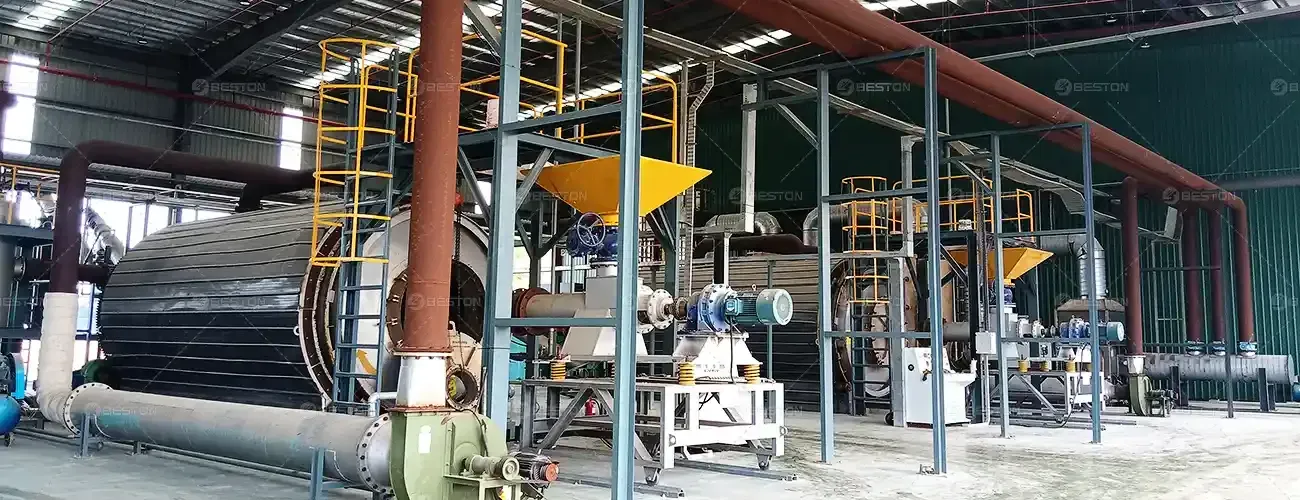
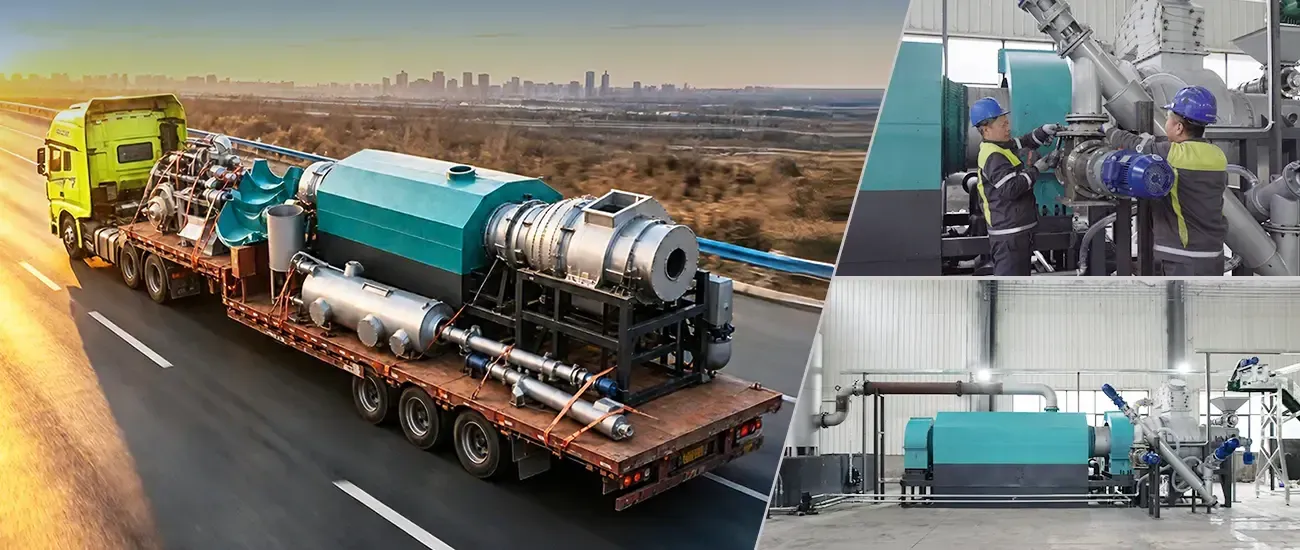
A suitable rice husk charcoal machine should provide stable temperature monitoring, adjustable heating, effective sealing, and controlled material residence time.
Operators should conduct pilot tests to identify the temperature profile that balances carbonization quality, product yield, and energy consumption.
5. Choose a Rice Husk Charcoal Machine That Supports Consistent Production
Equipment selection directly affects production stability and the ability to maintain consistent biochar quality.
When evaluating a rice husk charcoal machine, producers should consider several important features.
- Uniform Heating: Consistent heat distribution helps reduce differences in carbonization between different areas of the reactor.
- Reliable Sealing: Limiting unwanted oxygen entry helps prevent uncontrolled combustion and carbon loss.
- Temperature Monitoring: Multiple measurement points can provide better information about actual reactor conditions.
- Stable Feeding and Discharging: Consistent material movement supports predictable processing and reduces operational fluctuations.
- Gas Recovery and Treatment: Combustible pyrolysis gas may be recovered for process heating, while appropriate exhaust treatment is necessary to control emissions.
Equipment should be selected according to feedstock moisture, processing capacity, and required product specifications rather than rated output alone.
6. Establish Batch Sampling and Quality Records
Even when the same equipment and feedstock are used, biochar quality can vary between production runs.
Producers should establish a documented quality management system that includes:
- Feedstock source and incoming material inspection
- Moisture and particle size records
- Carbonization temperature and operating time
- Production quantity and batch identification
- Laboratory analysis reports
- Equipment maintenance and emission monitoring records
Samples should represent the entire production batch rather than being collected from only one convenient location. Proper homogenization and representative sampling are important for obtaining reliable test results.
The EBC analytical framework provides specific guidance for representative sample preparation and testing.
Conclusion
Rice husk charcoal can be a valuable biochar product, but its relatively high silica and ash content makes quality control especially important. Producers must evaluate organic carbon, H/Corg, heavy metals, PAHs, pH, electrical conductivity, and other relevant properties according to their target applications.
Investing in a suitable rice husk charcoal machine is an important step toward stable production, but equipment alone cannot guarantee certification. Consistent feedstock preparation, controlled carbonization, laboratory testing, and complete production records are equally important.
For producers planning to enter the European market, the best strategy is to identify the appropriate EBC certification class early and design the entire production process around its current requirements. This approach helps reduce quality risks and builds greater confidence among commercial buyers.