How Is a Modern Pyrolysis Oil Plant Different from Traditional Crude Oil Refining Methods?

Pyrolysis technology is sometimes misunderstood as a simple process of heating waste materials to produce liquid oil. This misconception often comes from traditional, primitive oil recovery methods, which typically rely on rudimentary heating equipment, limited process control, and inadequate emission treatment.
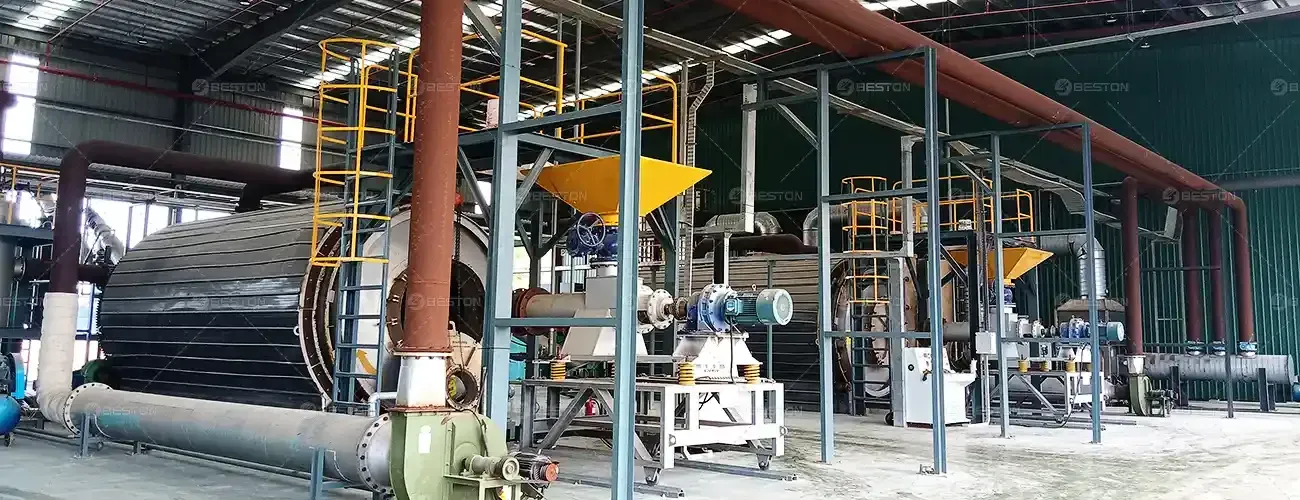
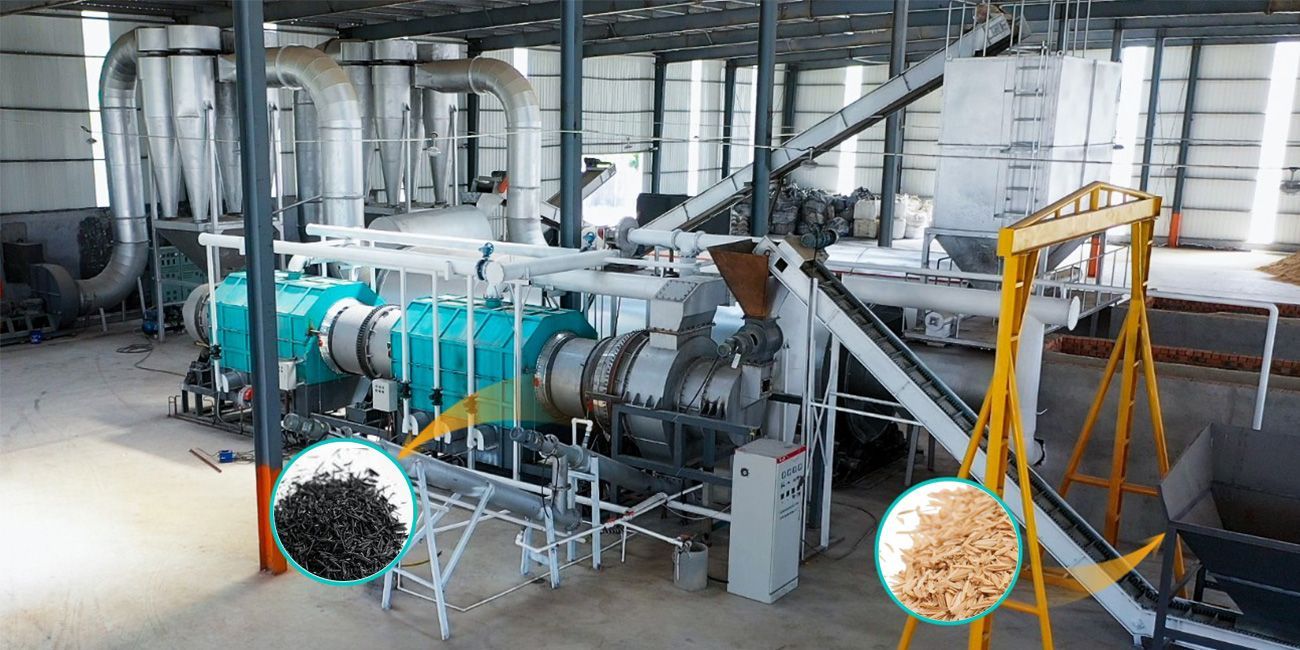
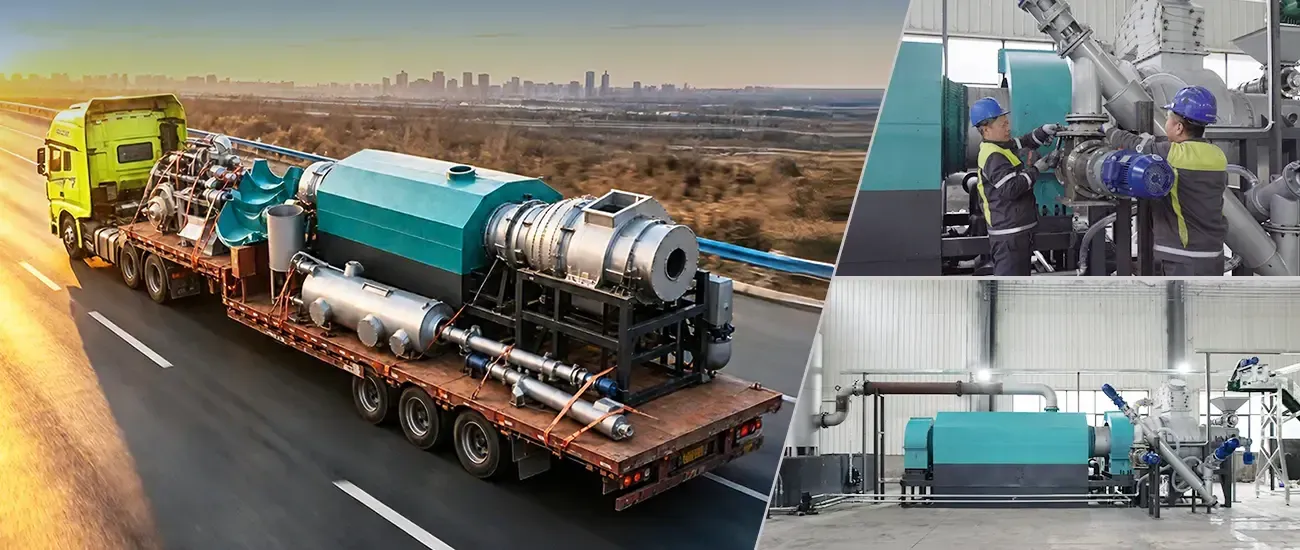
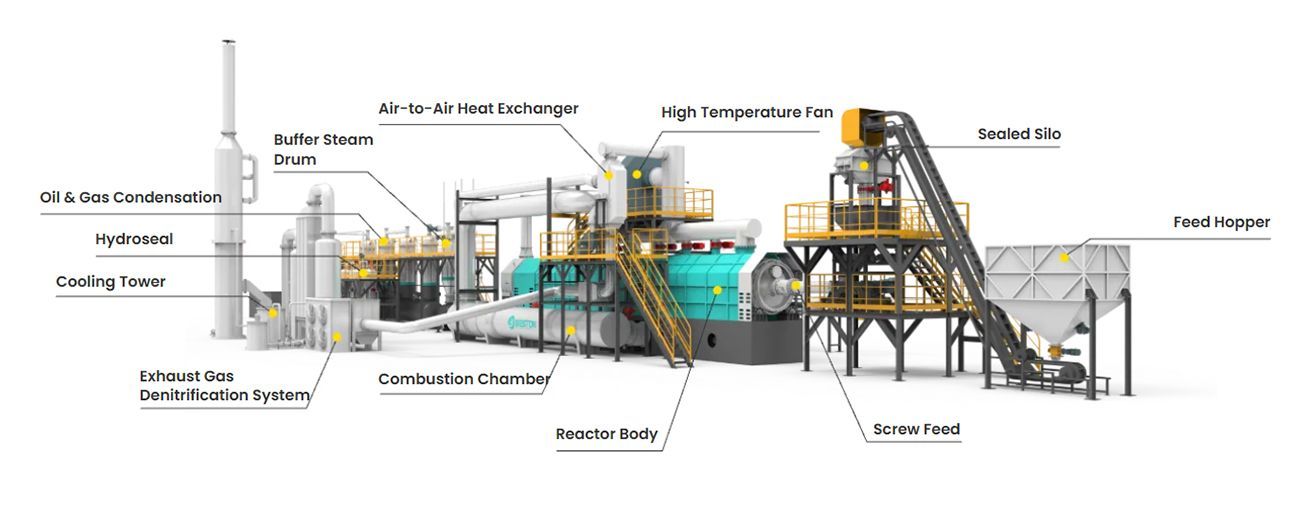
Modern pyrolysis oil plants, however, are fundamentally different. They use engineered reactors, controlled thermal decomposition, integrated condensation systems, automated operation, and environmental protection technologies to convert waste materials into recoverable products.
Understanding these differences is important when evaluating the industrial feasibility, environmental performance, and long-term reliability of a pyrolysis project.
1. Sealed Reactor Design Instead of Open or Rudimentary Heating
One of the most important differences is the reactor structure.
Traditional crude oil recovery methods may use basic heating vessels with limited sealing and temperature control. Such arrangements can result in uncontrolled gas release, air infiltration, and inconsistent processing conditions.
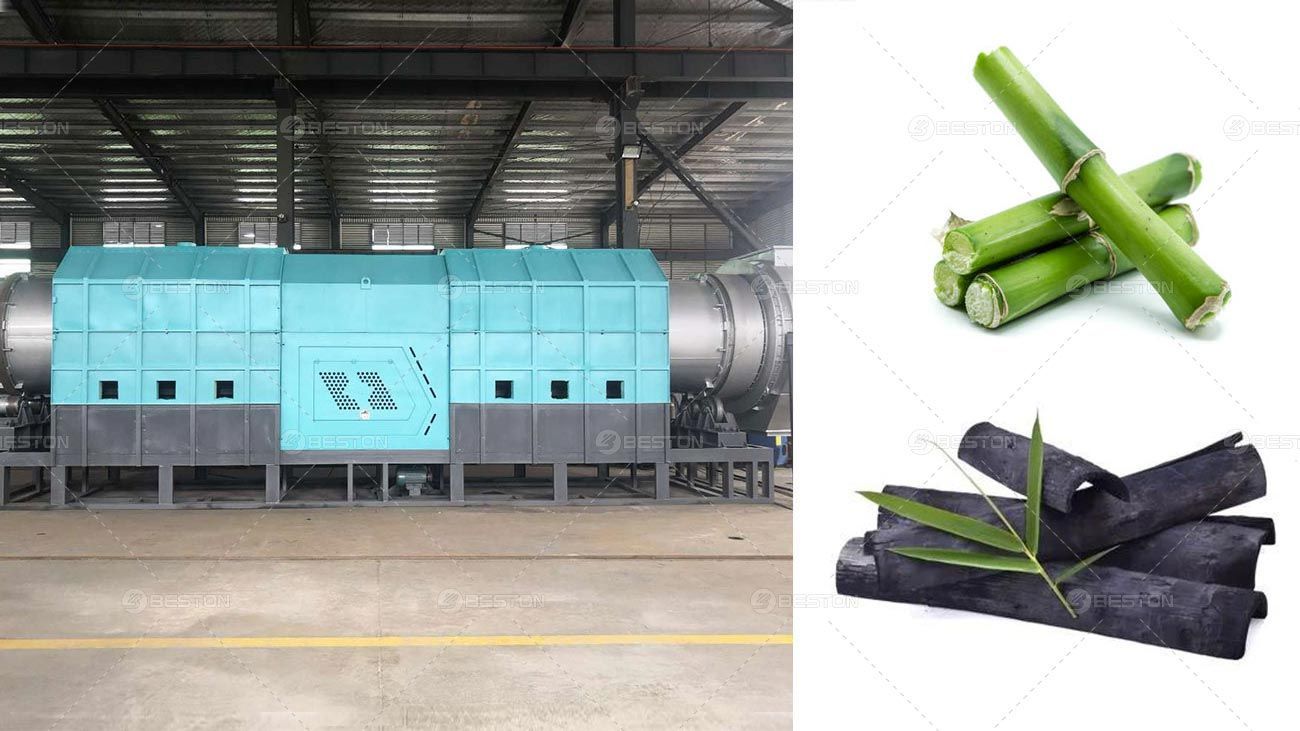
A modern pyrolysis oil plant uses a specially designed sealed reactor. Waste materials are heated in an oxygen-free or oxygen-limited environment, allowing thermal decomposition to take place without conventional combustion.
The reactor is engineered with appropriate sealing structures, pressure monitoring, and temperature measurement systems.
This design helps:
- Prevent uncontrolled leakage of combustible gases.
- Minimize oxygen infiltration into the reactor.
- Maintain stable thermal decomposition conditions.
- Improve operational safety and process consistency.
The sealed reactor is the foundation of an industrial pyrolysis system.
2. Controlled Thermal Decomposition Instead of Unregulated Heating
Traditional rudimentary processing often lacks precise temperature regulation, making it difficult to maintain consistent operating conditions.
Modern pyrolysis systems use controlled heating to maintain the required temperature range for different feedstocks.
For example:
- Waste plastics are commonly processed at approximately 300–600°C.
- Waste tires are generally processed at approximately 350–550°C.
- Biomass pyrolysis commonly operates within approximately 300–600°C.
These are indicative ranges rather than universal operating specifications. Actual temperatures depend on feedstock characteristics, reactor design, and target products.
Modern plants integrate temperature sensors, automatic control systems, and adjustable heating arrangements to regulate reactor conditions.
This helps improve product consistency, reduce unnecessary energy consumption, and prevent overheating or unstable operation.
3. Integrated Condensation and Oil-Gas Separation
Another major difference lies in how pyrolysis vapors are collected and processed.
In rudimentary oil recovery operations, vapor cooling and liquid collection may rely on simple pipes or basic condensation equipment. This can result in incomplete condensation, product losses, and poor separation efficiency.
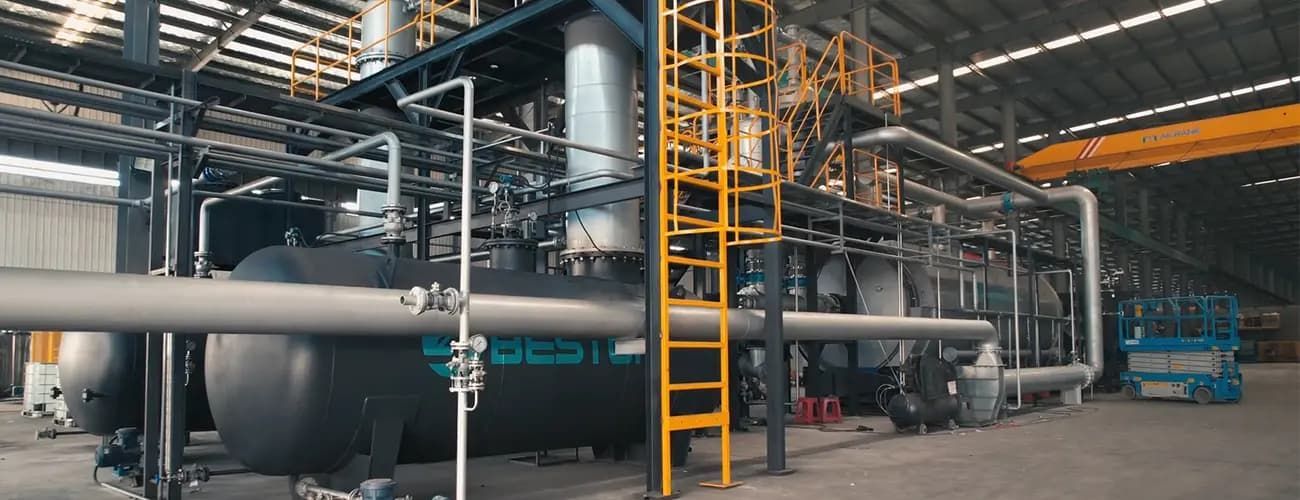
A modern Pyrolysis Oil Plant incorporates an engineered condensation system.
The process generally involves:
- Pyrolysis vapors leave the reactor.
- Heavy impurities and entrained particles are removed where required.
- Vapors enter staged condensers for cooling.
- Condensable hydrocarbons are recovered as liquid pyrolysis oil.
- Non-condensable gas is collected for further treatment or energy recovery.
Depending on the system configuration, staged condensation can also help separate oil fractions with different condensation characteristics.
This integrated design improves vapor recovery and provides better control over the product collection process.
4. Environmental Protection and Emission Treatment
Environmental management is one of the most important distinctions between modern industrial pyrolysis and primitive oil recovery.
Heating waste materials can generate combustible gases, volatile organic compounds, particulate matter, and other potentially harmful emissions. Their composition depends on the feedstock and operating conditions.
A modern pyrolysis plant therefore requires more than a sealed reactor. It needs an appropriate environmental protection system.
Typical components may include:
- Combustible gas recovery: Non-condensable pyrolysis gas can be collected and used as process fuel when suitable.
- Exhaust gas treatment: Combustion exhaust may pass through dust removal, scrubbing, or other treatment equipment according to the emission profile.
- Wastewater management: Process wastewater and contaminated water require appropriate collection and treatment.
- Leak prevention: Sealed pipelines, valves, and monitoring systems help reduce fugitive emissions.
The exact configuration should be determined by feedstock composition, process design, and local environmental regulations.
A modern plant should be evaluated based on its actual emission control performance, not simply on whether it includes a gas treatment unit.
5. Automated Operation and Industrial Safety
Traditional rudimentary processing often depends heavily on manual operation and visual monitoring. This creates challenges in maintaining stable temperatures, coordinating equipment, and responding to abnormal operating conditions.
Modern pyrolysis plants increasingly integrate PLC-based control systems and industrial instrumentation.
Depending on the configuration, these systems can monitor:
- Reactor temperature and pressure.
- Feeding and discharging operations.
- Heating system performance.
- Gas flow and combustion conditions.
- Condensation system operation.
- Critical safety alarms and interlocks.
Industrial safety measures may also include emergency shutdown systems, pressure relief devices, combustible gas detection, and fire protection facilities.
These features help operators identify abnormal conditions and respond more effectively, reducing dependence on manual intervention.
6. Product Quality Control and Commercial Applications
Traditional crude oil recovery methods often focus primarily on collecting liquid products, with limited attention to composition and downstream usability.
Modern pyrolysis projects place greater emphasis on product quality and market requirements.
For example, plastic pyrolysis oil may contain a mixture of paraffins, olefins, and aromatic hydrocarbons. Waste tire pyrolysis oil may contain different hydrocarbon fractions and sulfur compounds.
Consequently, liquid yield alone cannot determine product value.
Modern projects may incorporate:
- Oil-water separation.
- Fractional distillation.
- Filtration and impurity removal.
- Further upgrading and refining.
- Laboratory testing and batch quality monitoring.
The appropriate treatment route depends on the feedstock, oil composition, and requirements of downstream buyers.
For petrochemical applications, additional upgrading may be necessary before the oil can be accepted as a suitable chemical feedstock.
Conclusion
The difference between traditional rudimentary oil recovery and a modern Pyrolysis Oil Plant is not simply the scale of the equipment. It lies in the engineering of the entire process.
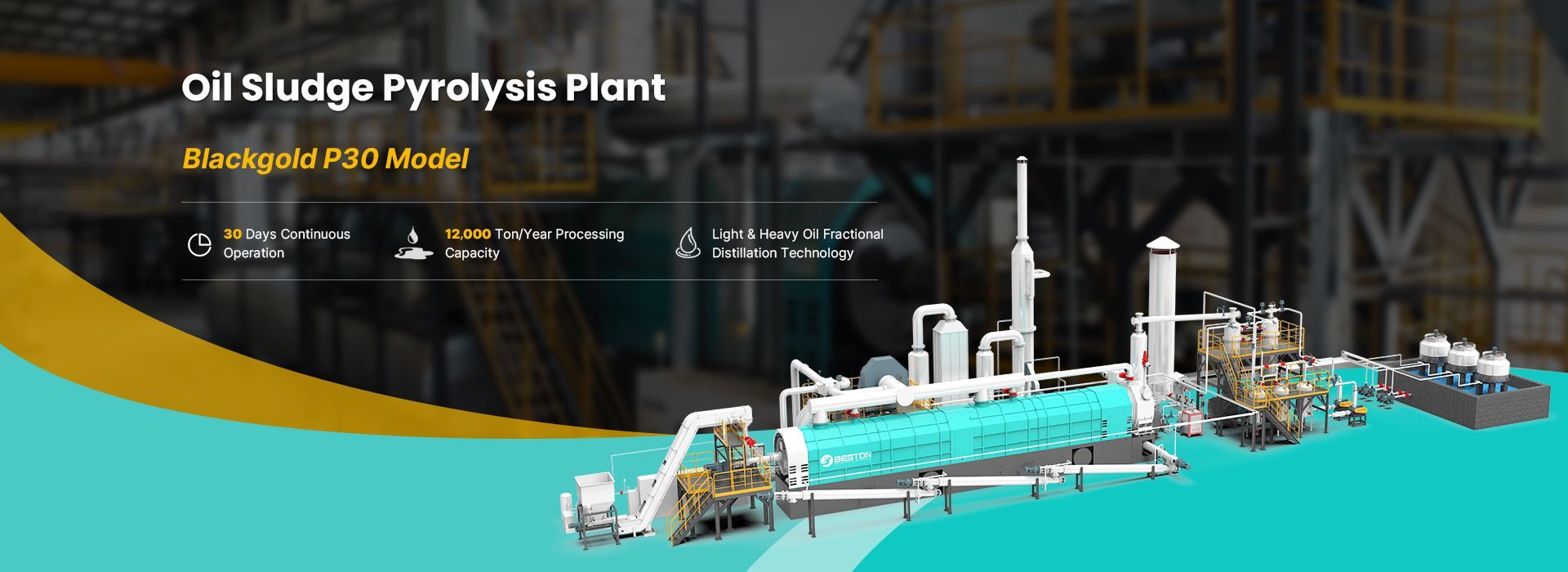
A modern industrial system integrates sealed reactor technology, controlled thermal decomposition, efficient vapor condensation, environmental protection, automated operation, and product quality management.
These features make pyrolysis a more controlled and technically structured approach to waste resource recovery.
However, industrial equipment alone does not guarantee environmental compliance or commercial success. Actual performance depends on proper engineering, reliable operation, effective emission treatment, and compliance with local regulations.
Ultimately, modern pyrolysis should be evaluated as an integrated industrial waste-to-resource process, not as a simple method of heating waste to extract oil.